
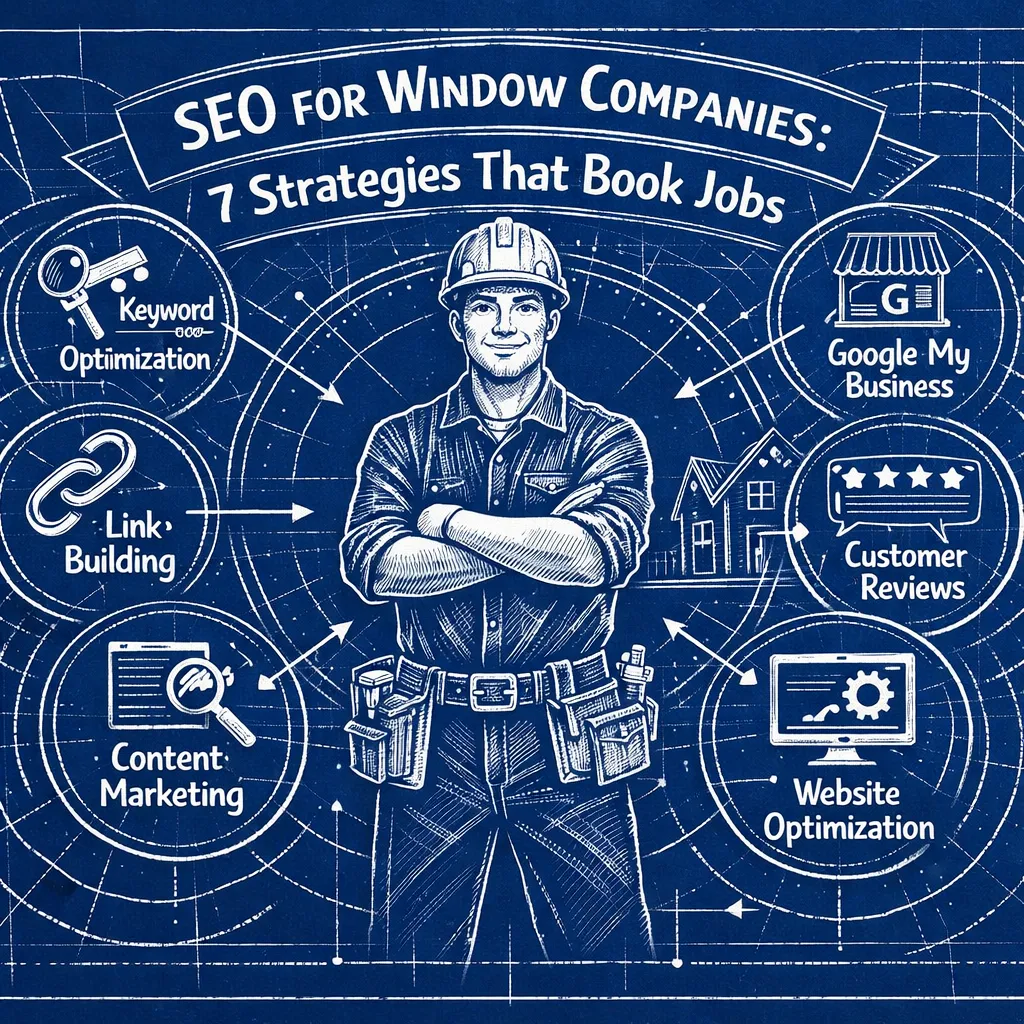
SEO for Window Companies: 7 Strategies That Book Jobs
SEO for Window Companies: 7 Strategies That Book Jobs
Your phone should be ringing. You've got the best installation team, decades of experience, and homeowners in your area need what you offer.
But when someone searches for "energy-efficient replacement windows near me," they're calling your competitor instead.
Here's what typically happens:
78% of local mobile searches result in an offline purchase
88% lead to a call or visit within 24 hours
28% make a purchase within 24 hours
If your window company isn't showing up in those searches, you're losing jobs to businesses that might not even match your quality.
At MoreWindows, we've helped window and door contractors turn their online presence into a reliable source of bookings.
We're not talking about vague "brand awareness" or vanity metrics. We're talking about strategies that put your business in front of homeowners ready to buy.
This guide breaks down seven proven SEO tactics that work specifically for window companies in 2026. Each one is backed by current data and designed to help you capture high-intent searches that turn into real revenue.

Why Local SEO Matters More Than Ever for Window Companies
Window replacement isn't an impulse buy. Homeowners research carefully, compare options, and usually choose a local contractor they can trust.
That's why 46% of all Google searches are local, with the majority looking for services like yours.
The Numbers Tell the Real Story
When someone searches for window companies in their area, they're not just browsing:
90% of consumers making local searches purchase within one week
28% of local searches result in a purchase within 24 hours
80% of local mobile searches convert overall
Your window contractor marketing strategy needs to account for this immediacy. Miss the top of search results, and you've lost a qualified lead who's ready to book a consultation.
Why the Map Pack Drives Most Clicks
Local pack rankings (those three businesses that appear with map pins) capture the majority of clicks.
Here's the breakdown of what influences those rankings:
Your Google Business Profile: 32% of local pack ranking weight
Reviews: 20% (up from 16% in previous years)
On-page signals: 15%
Behavioral signals: 9%
Links: 8%
This shift means traditional website SEO isn't enough anymore. You need a complete local strategy that covers multiple ranking factors simultaneously.

Strategy 1: Optimize Your Google Business Profile to Dominate the Map Pack
Your Google Business Profile is your most powerful local SEO asset. It directly influences whether you appear in the map pack, which shows up before organic search results and captures the highest-intent clicks.
Primary category selection matters most.
If you select "Window Installation Service" as your primary category, Google knows exactly what you do. Adding secondary categories like "Door Supplier" or "Glass & Mirror Shop" helps you appear for related searches without diluting your main focus.
Essential GBP Optimization Steps
1. Verify your exact service location
Your map pin needs to sit precisely where you operate. Even small errors in pin placement can hurt rankings when searchers are nearby.
2. Fill out every section completely
Required elements include:
Business description
Services offered
Hours of operation
Phone number
Website link
Business attributes
Incomplete profiles get lower visibility.
3. Post regular updates
Weekly posts about recent projects, seasonal tips, or special circumstances keep your profile active. Google rewards businesses that consistently engage with their profile.
4. Add high-quality photos
Homeowners want to see your work before they call. Upload photos of:
Completed installations
Your team at work
Before-and-after transformations
Businesses with photos receive 42% more requests for driving directions and 35% more clicks through to their websites.
5. Track and respond to messages
Enable messaging and reply quickly. 24% of Google Business Profile actions are direct calls, but messages are growing as a contact method.
Fast responses signal to both Google and potential customers that you're attentive.

Strategy 2: Build Review Velocity That Google Actually Rewards
Reviews aren't just about your star rating anymore. Google's algorithm now prioritizes review velocity, meaning the steady, consistent growth of new reviews over time.
A burst of 50 reviews in one month followed by silence actually hurts you more than getting 3-4 reviews consistently every month.
Reviews now account for 20% of local pack ranking weight, making them one of the top three ranking factors.
What Google Looks For in Your Review Profile
Number of text reviews matters most
Short "Great service!" reviews provide less ranking value than detailed reviews that mention:
Specific services performed
Location details
Project outcomes
Timeline and process
Recency keeps you competitive
Reviews from the past 90 days carry more weight than older ones. If your last review is six months old, Google assumes you're less active than competitors with recent feedback.
Steady growth signals legitimacy
According to industry data, 90% of marketers confirm reviews directly affect local pack rankings.
But inconsistent patterns raise red flags. Aim for 3-5 new reviews monthly rather than irregular batches.
Response rate matters too
Businesses that respond to reviews, both positive and negative, demonstrate engagement. You don't need to respond to every review, but regular responses show you're paying attention.
How to Generate Reviews Without Being Pushy
Make it simple
Send a follow-up text or email 2-3 days after project completion with a direct link to your Google review page. Many homeowners want to leave reviews but forget or don't know how.
Time your request right
Ask when customers are happiest:
Right after successful installation
When they comment on how much better their home feels
During follow-up quality checks
Train your team to mention reviews naturally
"If you're happy with how everything turned out, we'd appreciate it if you could share your experience on Google" works better than formal email requests.

Strategy 3: Create Service Area Pages That Target Buying Intent
Generic "We serve the greater metro area" content doesn't rank anymore.
Google prioritizes specific, useful pages that genuinely help searchers find local service providers.
Service area pages work when they provide actual local value. Each city or neighborhood you serve should have a dedicated page with unique content, not just a template with the location name swapped out.
Elements That Make Service Area Pages Rank
1. Local project galleries
Prove you've done work in that specific area:
Include 3-5 photos of recent installations
Add captions mentioning the neighborhood or city
Show different window types you've installed locally
2. Area-specific tips and considerations
Answer questions like:
Does the coastal climate require specific window features?
Do historic district regulations affect installation options?
What energy efficiency features matter most in this climate?
This information helps homeowners and signals local expertise to Google.
3. Testimonials from customers in that area
Real reviews from actual addresses (first name and street name only) build trust and local relevance.
4. Clear contact options for that location
Reduce friction for ready-to-buy homeowners:
Prominent phone numbers
Contact forms
Booking calendars
Response time expectations
5. Drive time and service radius information
Let people know you actively serve their area without making them guess whether you'll come out for a consultation.
Avoiding Thin Content Penalties
Don't create pages for every zip code or tiny subdivision
Focus on cities and major neighborhoods where you:
Actively market
Have completed multiple projects
Plan to continue serving
Each page needs genuinely unique content
Minimum 400-500 words that are truly different. Changing three sentences while keeping everything else identical doesn't fool Google's duplicate content detection.
Limit service area pages to reasonable drive times
Creating pages for cities 3 hours away when you rarely work there damages credibility.
Strategy 4: Use Schema Markup to Stand Out in Search Results
Schema markup is code that helps search engines understand your content better.
While it doesn't directly boost rankings, it enables rich results that increase click-through rates and visibility.
Types of Schema That Work for Window Companies
LocalBusiness schema
Tells Google exactly:
What services you offer
Where you operate
Your hours
Contact information
This data feeds into various Google features, including the knowledge panel and local pack.
FAQ schema
Can trigger rich snippets that display your answers directly in search results. When someone searches "how long does window replacement take," your FAQ answer might appear as a featured snippet above organic results.
Product schema
Helps when you want to highlight specific window lines or brands you carry. While you shouldn't list fixed prices (they change), you can showcase:
Product features
Energy efficiency ratings
Warranty information
Available customization options
Implementation That Works
Use plugins for easy setup
Most modern website platforms have tools for adding schema:
WordPress users: Schema Pro or Rank Math
Custom sites: Manual code insertion in site header or footer
Test your implementation
Use Google's Rich Results Test tool:
Paste your URL
Verify Google can read your structured data correctly
Fix any errors before going live
Errors in schema implementation can prevent rich results from appearing.
Focus on high-value schemas
Prioritize the types that provide the most value for window companies:
LocalBusiness
Service
FAQs
Product
Don't waste time on schemas that don't match your business model.
Strategy 5: Speed Up Your Mobile Experience to Capture Form Submissions
58% of people search for local businesses daily on smartphones.
When they land on your site, they want instant answers and easy contact options. Slow loading times kill conversions before they start.
Core Web Vitals (Google's mobile performance metrics) indirectly affect rankings through user engagement signals. If visitors bounce because your site loads slowly, Google notices and ranks you lower over time.
Critical Mobile Elements That Drive Bookings
Quote forms need to load instantly
The form should appear within 2 seconds of page load
Every second of delay reduces conversion rates by roughly 7%
Place forms above the fold on mobile
Click-to-call buttons should be prominent
Place your phone number at the top of every mobile page
Enable tap-to-call functionality
Remember: 24% of Google Business Profile actions are calls
Eliminate pop-ups that block content
Google penalizes intrusive interstitials on mobile
If you must use pop-ups, make them easy to close
Ensure they don't cover main content
Compress images without quality loss
Project photos are essential for window companies
Each image should be under 200KB
Use WebP format when possible for better compression
Minimize form fields
Ask for essentials only:
Name
Phone
Email
Project type
You can gather additional details during the actual consultation.
Testing Your Mobile Performance
Use Google's PageSpeed Insights tool
Check your Core Web Vitals scores:
Green scores (90+): Good performance
Yellow scores (50-89): Room for improvement
Red scores (0-49): Losing customers to faster competitors
Test your booking process on an actual phone
Time how long it takes from landing on your homepage to successfully submitting a quote request.
If it takes more than 60 seconds, simplify the process.

Strategy 6: Answer Pre-Purchase Questions Homeowners Actually Search For
Homeowners research extensively before contacting window companies. They want answers to specific questions about products, installation, costs, and benefits.
Content that addresses these questions positions you as a trusted resource.
Long-tail keywords like "are triple-pane windows worth the extra cost" or "how long does window installation take" capture high-intent searches. Someone asking these questions is actively evaluating whether to move forward with a project.
Top Questions Homeowners Search For in 2026
Q: What type of window is best for energy efficiency?
Explain the differences between:
Double-pane vs. triple-pane
Low-E coatings
Gas fills (argon vs. krypton)
Frame materials
Help readers understand which options match different climate zones and budget levels.
Q: What is the difference between double- and triple-pane windows?
Cover these key points:
Insulation values (U-factor comparisons)
Noise reduction capabilities
Cost differences
When triple-pane makes sense vs. when double-pane is sufficient
Q: Do triple-pane windows provide noticeable energy savings?
Present realistic expectations based on:
Climate zone
Existing window conditions
Home insulation levels
HVAC system efficiency
Energy savings vary by region and home characteristics. Encourage readers to get a professional energy assessment for personalized estimates.
Q: How long does window replacement take?
Typical projects take one to three days depending on:
Number of windows
Installation complexity
Home structure considerations
Weather conditions
Explain what factors extend timelines and what homeowners should expect during installation.
Q: What warranties come with replacement windows?
Discuss:
Manufacturer warranties (typically 10-20 years for glass, lifetime for frames)
Installation warranties (workmanship guarantees)
What each typically covers
Why both matter
Recommend readers ask specific warranty questions during consultations.
Q: What are the top U.S. window brands?
Mention well-known manufacturers without pushing specific brands:
Andersen
Pella
Marvin
Milgard
Let homeowners know that brand choice should balance quality, performance specifications, and budget.
Q: How do I know if my windows need replacement?
Cover common signs:
Drafts around frames
Condensation between panes
Difficulty opening or closing
Visible damage or rot
High energy bills
Advise scheduling a professional inspection for accurate assessment.
Content Format That Converts
Create dedicated blog posts for major questions
Each post should thoroughly answer one question without veering into unrelated topics.
Use clear, scannable formatting
Short paragraphs (3-4 lines maximum)
Bullet points where appropriate
Bold text to highlight key takeaways
Subheadings every 200-300 words
End each post with a clear next step
Invite readers to:
Schedule a consultation
Request a quote
Call with specific questions about their situation
Strategy 7: Monitor Your Competitors and Adapt Faster Than They Do
Your competitors are working on their SEO too. The window companies that consistently book more jobs are the ones that spot opportunities quickly and adjust their strategies based on what's actually working.
What to Track
Local pack rankings for your most important keywords
Use tools like:
BrightLocal
Manual searches from different locations
Mobile vs. desktop comparisons
Track where you appear versus competitors for 5-10 primary keywords.
Their Google Business Profiles
Analyze competitor profiles to see:
What categories are they using?
How often do they post?
What types of photos get the most engagement?
How quickly do they respond to reviews?
Learn from their successes without copying their content.
Their website content
Review what's working for them:
What service areas do they target?
Which questions do their blog posts answer?
Where are there gaps you could fill with better, more detailed information?
What content formats do they use?
Their review growth patterns
If a competitor suddenly gets 20 new reviews in a month, they've probably implemented a new review generation system.
You need a strong review strategy to stay competitive.
Using Data to Make Better Decisions
Set up monthly check-ins
Review key metrics:
Rankings for primary keywords
Website traffic from organic search
Lead sources (where quote requests come from)
Conversion rates by traffic source
Look for patterns
Ask yourself:
Which service area pages drive the most quote requests?
Which blog topics generate the most engagement?
What content types convert best?
Which keywords consistently lead to bookings?
Use Google Analytics to identify high-converting traffic
If organic traffic from specific keywords consistently leads to bookings, double down on content for those terms.
Track phone calls and form submissions separately
Knowing which marketing channels drive which contact types helps you allocate resources more effectively:
Organic search traffic patterns
Direct traffic from brand searches
Referral traffic from local directories
Social media sources
At MoreWindows, we help window and door contractors stay ahead of these trends. We're an AI-integrated revenue strategy partner, not just another agency promising leads.
Our focus is on helping Modern Contractors reply instantly and book jobs at the speed of AI, while Traditionalists struggle with manual phone tags.

How to Measure SEO Success for Your Window Company
Numbers tell you whether your SEO efforts actually generate revenue. Tracking the right metrics helps you invest more in what works and stop wasting time on tactics that don't move the needle.
Key Metrics to Track
1. Local pack rankings
Your first indicator of success:
Track position for 5-10 primary keywords
Monitor in your top service areas
Check changes weekly to spot trends
Compare your position to top competitors
2. Website traffic from organic search
Shows whether your content attracts visitors:
Total organic sessions
Pages per session
Average time on site
Bounce rate by landing page
But total traffic matters less than qualified traffic from relevant searches.
3. Quote request submissions and phone calls
The metrics that actually count:
Number of form submissions
Phone calls from your website
Click-to-call actions
Message inquiries
More traffic means nothing if it doesn't convert into consultations.
4. Cost per acquisition
Compares your SEO investment to job value:
Calculate your average project value
Track how many SEO-generated leads convert to paying customers
Compare cost per job from SEO vs. other marketing channels
5. Review growth rate
Indicates whether your reputation management process is working:
Track monthly new review count
Monitor response rate and time
Measure review sentiment over time
Aim for consistent monthly growth rather than irregular spikes.
Setting Realistic Timeline Expectations
SEO isn't instant
Most window companies see meaningful improvements within 3-6 months of implementing a comprehensive strategy.
Ranking changes can happen faster or slower depending on competition level in your market.
Different tactics have different timelines:
Local pack rankings: 4-6 weeks
Optimize Google Business Profile
Generate fresh reviews
Fix technical issues
Website content: 2-4 months
New blog posts gaining traction
Service pages ranking for competitive keywords
Building topical authority
Service area pages: 1-3 months
Neighborhoods with less competition rank faster
Major city keywords often require sustained effort over several months
Results vary by competition and content quality
Turn Your SEO Strategy Into Consistent Bookings
The difference between window companies that consistently book jobs and those that struggle isn't usually about who does better work.
It's about who shows up when homeowners are ready to buy.
These seven strategies work because they align with how homeowners actually search for window replacement services. They're not hacks or shortcuts. They're proven tactics based on current data about local search behavior and ranking factors.
Your Next Step
Audit your current SEO foundation:
✓ Check your Google Business Profile completeness ✓ Review your recent review velocity ✓ Identify which service areas lack dedicated pages ✓ Test your mobile site speed and form functionality ✓ Analyze your competitor's local presence
Pick one strategy from this list and implement it fully before moving to the next.
Starting with Google Business Profile optimization typically delivers the fastest results.
Need Help Implementing These Strategies?
MoreWindows specializes in helping window and door contractors build AI-integrated systems that convert searches into revenue.
We're not just marketers. We're your revenue strategy partner, built specifically for the window and door industry.
What makes us different:
We focus on booking jobs, not just generating leads
We use AI to help you respond instantly to inquiries
We understand window contractor challenges because we only work in this industry
We measure success by revenue growth, not vanity metrics
The window replacement market is competitive, but homeowners need what you offer. The question is whether they'll find you first or call your competitor.
With the right SEO strategy, you control that outcome.
Frequently Asked Questions
How long does it take to see results from window company SEO?
Local pack rankings can improve within 4-6 weeks with proper Google Business Profile optimization and consistent review generation. Website content typically requires 2-4 months to rank for competitive keywords. Service area pages targeting less competitive neighborhoods may rank faster. The timeline depends on current website authority, competition level in your market, and how consistently you implement optimization efforts.
What's more important for window companies: Google Ads or SEO?
Both serve different purposes. Google Ads deliver immediate visibility and work well for new businesses or seasonal promotions. SEO builds long-term authority and provides more cost-effective leads over time. Local SEO leads close at nearly 15%, making it extremely valuable for established window companies. Most successful contractors use both: ads for immediate volume and SEO for sustainable growth.
How many reviews do I need to rank in the local map pack?
Review volume matters less than review velocity (consistent growth). Businesses with 200+ reviews generate approximately twice the revenue of those with fewer reviews, according to industry research. However, steady monthly growth (3-5 reviews per month) often outperforms irregular bursts. Focus on maintaining consistent review generation rather than hitting a specific number. Quality reviews with detailed text content provide more ranking value than short reviews.
Should I create separate service pages for every city I serve?
Only create service area pages for cities and major neighborhoods where you actively market and have completed multiple projects. Each page needs unique, valuable content (400-500+ words minimum). Avoid creating pages for areas outside your reasonable service radius or areas where you've never worked. Google penalizes thin, duplicate content. Prioritize major service areas first, then expand to secondary markets as you build content resources.
What schema markup should window companies implement first?
Start with LocalBusiness schema, which tells Google your business type, service areas, hours, and contact information. Add FAQ schema for commonly asked questions about your services. If you feature specific window products or brands, implement Product schema to showcase features and benefits. Use Google's Rich Results Test to verify correct implementation. Focus on schemas that match your actual content and business model.
Does mobile site speed really affect local SEO rankings?
Mobile performance affects rankings indirectly through user engagement signals. Slow-loading sites have higher bounce rates and shorter visit times, which Google interprets as poor user experience. Since 58% of people search for local businesses daily on smartphones, mobile optimization is critical. Fast quote forms, click-to-call buttons, and compressed images directly impact conversion rates. Use Google's PageSpeed Insights to identify specific improvements.
How do I compete with national window companies in local search?
National companies often struggle with true local relevance. Your advantages include authentic local testimonials, area-specific expertise, and genuine community presence. Emphasize your local knowledge in service area pages (climate considerations, local regulations, neighborhood characteristics). Generate reviews from customers in specific neighborhoods. Participate in local community events and earn local backlinks. Google prioritizes businesses with strong local signals over national brands with generic content.
What's the best way to handle negative reviews?
Respond professionally within 24-48 hours. Acknowledge the concern, apologize for any shortfall, and offer to resolve the issue offline. Never argue or make excuses publicly. Contact the customer directly to address their concerns. Many customers update or remove negative reviews after positive resolution attempts. How you handle negative feedback demonstrates customer service quality to future prospects. According to research, 98% of consumers read reviews before choosing local businesses, and they evaluate how you respond to criticism.